Showing posts with label Languages. Show all posts

2010/02/11

New Language Blog 新しい「言語ブログ」

http://language-tetsu.blogspot.com/

Started a new blog on languages. Pls give it a look! Thank you!

新しい言語に特化したブログを始めたよ!是非見てあげてください!よろしくお願いします!

J'ai commence un nouveau blog sur les langues! Vos commentaires sont de bienvenus! Merci!

請来看我的新Blog!

Por favor, vengan ver mi nuevo blog sobre idiomas!

2008/07/11

Language-associated personality、言葉によって変わる人格


A Japanese friend once told me that she feels like a different person when she speaks English. I totally agreed with her! I guess that in order to speak a language well, it helps if you think in that language and incorporate the culture. At the same time, you probably take on a different personality accordingly.

Then recently, I found this post on my friend David's site. It talks about personality shifts as you speak different languages. Here's the original Reuters article that he referred to. The guy in the video below (also seen on David's site) seems to have multiple personalities!

Any thoughts?

ある日、友達(日本人)が、「私英語を喋る時って、違うパーソナリティーを持つ感じがする」と言った。つい、「俺も!」って言っちゃった。一つの言葉をマスターするのには、その言葉で物事を考えるのと文化を取り入れる努力も必要なのではないでしょうか。そうしているうちに、違う人格が形成されるんでしょうね。

そこで、最近友人Davidのサイトでこんな記事を見た。なんと、人は喋る言語によって、パーソナリティーを無意識中に合わせているそうで。彼が引用したReuterの記事はこちら。下のビデオ(同じくDavidのサイトで見た)に出ている人は多重人格かも!


面白いでしょう!ご意見を是非。


2008/02/29

Stupid? Épais? 笨蛋?Tonto?バカ?


I found this on Digg some time ago... I'm still laughing.

J'ai trouvé ça sur Digg il y a quelque temps. Ca vaut d'l'or! J'ai encore des larmes aux yeux.

好久以前在Digg上找到的。笑死人了。你不覺得怪怪的嗎?

Encontré esto sobre Digg hace un rato... pero todavía estoy riendo.

大分前にDiggで見つけたものだけど、ぬぬっ?なんかおかしくねえ?ゲヘへ。。。世の中には馬鹿な人がいるもんだ。笑いすぎて涙が止まらないよ。

2007/10/29

Learning languages? Dream on!? 言語習得は夢話?

As you can see on the left side-bar, I recently set up a counter for the most popular posts on this blog, and it shows that the two most popular posts have been (and probably will continue to be) "Learning languages Tetsu's way" and "Pentalingual conversation with a linguist".

The world is getting smaller and smaller, and clearly people are more and more (and more) interested in multilingualism. For example Ping refers to my blog every once in a while. Thanks buddy! And there are also many other great websites and blogs out there about learning languages (such as The Linguist) and making language learning social networks (such as Kantalk).

Speaking of Kantalk, I follow Kantalk's founder D’s blog very closely, and recently he posted an interesting article on something that supports an idea/belief of mine. Essentially, D's post was on a recent news of a non-English speaking Czech bike racer who got into an accident and woke up with temporary amnesia and, get this, spoke not Czech, but perfect English with perfect accent. However, two days later, as his memory came back, he lost all his English.

Now, my idea/belief is that we register everything we hear into our subconscious, ALL THE TIME (this idea probably isn't new, and hopefully someone could direct me to some information on this). In a way, our mind is like a hard-drive with limitless capacity. What is important then is not to forcefully add more information by painful studying (since information probably goes in passively anyways), but rather to find ways to "retrieve" the information efficiently and to keep it ready for use all the time, like keeping it in the RAM. Of course, practising is one way, and probably the best way for now. But could psychology or neurobiology come up with some shortcuts?

You see, I believe this because I myself have experienced similar things as that biker, although I’ve not had to go through anything quite as traumatic. It’s about dreaming in foreign languages. Throughout my life people have asked me "Tetsu, what language do you dream in?" And invariably I would answer, it depends on who I am talking to in my dreams. Logical right? Even in my dreams, it makes absolutely no sense for me to talk to my parents in English or to my English friends in Japanese. But this can get out of hand when you’re talking to someone in a language that you "think" you don’t know. This is what happened to me when I was learning Spanish. I had only been studying the language for a few weeks on my own before going to Ecuador to visit my friend Greg. And there I was only able to talk to people on a very superficial level at that time. However, during my short stay in Ecuador I remember having dreams about great discussions with everybody in perfect Spanish. …but sadly everything would be gone when I woke up.

So the question is, what is it in my dreams that allowed me to speak the foreign language perfectly, while when awake, I couldn’t do it? Is it inhibition? If so, then psychological training may lead to great results. Is it neurophysiological? If so, then theoretically one could one day discover some neuronal connections or the release of some sort’a physiochemical factors to allow this to happen when awake! Either way, it would be Nobel Prize material…

Language dreamers, your comments are welcome!


みんな気づいてくれたかもしれないが、最近左のサイドバーにこのブログで一番人気のある記事のランキングを載せた。やっぱり、一番人気のあるのは「テツ流言語習得法」と「言語学者と5カ国語で討論」だね。

世界がどんどん狭くなって行く中、多言語習得に興味を持つ人がますます増えて行っているようだ。例えば、Ping君なんかよく僕のブログを引用してくれる。ありがとうよ!そして、その他にもインターネット上には言語習得に関する素晴らしいウェブサイトやブログ(例、The Linguist)、または言葉に興味のある人々のためのソーシャルネットワーク(例、Kantalk)などがいっぱいある。


そう言えば、最近Kantalkの創立者であるDのブログに面白い記事があって、これは僕が考えているあるアイディアをサポートしてくれるものだなと思った。基本的にDの記事は、最近バイクのレースで事故って、短期記憶喪失症になったチェコのレーサーの話。この人は元々全然英語喋らないのに、 事故から目覚めてからはチェコ語が全然喋れなくって、逆に完璧な英語を完璧なアクセントで喋ったと言う。残念ながら、二日後には徐々に記憶も戻ってきて、英語も消えて行った。


そこで、僕のアイディアなんだけど、おそらく人間って、日々聞いているもののすべてを常に潜在意識に記録しているのだろうと思う(多分これは新しいアイディアではないと思うので、情報がある方、教えて下さい。)。パソコンに例えると、無限大のハードディスクにどんどん新しいものをひたすら書き込んでいるみたいな。そこでじゃあ大切なのは、暗記などのキツイ勉強法で無理矢理詰め込むことが重要なのではなく(どうせ大量な知識は自然に入るでしょうから)、逆にいかに効率よく情報を取り出すことを学ぶのが賢いのでは。またパソコンに例えると、いかにRAMに情報をキープすることだよね。勿論、練習を重ねるのが一番の手法でしょう。とりあえず、いまはね。でも、心理学や神経科学などの知見からなにかいい方法が発見されないかと期待を膨らましている自分がいる。


なぜこんな話題になったかと言うと、僕もあのレーサーにちょっと似た様な経験がある。全然トラウマとは関係ないけど。これは夢の話。実は僕は子供の時から常に人に聞かれることがあります。「テツって何語で夢を見るの?」って。それに対して僕の答えはいつも同じ。「それは登場人物による」。当たり前でしょう?いくら夢の中でも、自分の親と英語で話すことなんて考えられないし、英語圏の人たちと日本語で話すのも変な感じ。でも、こう言うのって、自分が知らないと「思っている」言葉になると、不思議な気分になる。これはスペイン語を習っていた時で、友人のグレッグに会いにエクアドルに行った時の話。当時はまだ独学で数週間しかスペイン語を習っていなくて、ジッちゃん・バーちゃんたちみたいな暇な人たちとゆっくり話して、やっとちょっとだけお話が出来ていたレベルだった。しかし、夜になると、夢の中ではパーフェクトなスペイン語で皆と楽しくワイワイやっていた。でも、不思議なことに、起きるとヘタクソな自分に戻っていた。


従って、ここでの疑問は夢の中では完璧に喋らしてくれて、起きると駄目になる要素とはなんでしょうか?恥?もしそうであれば、何か斬新な心理学的療法によって変えられるのではないでしょうか。または、何らかの神経・生理的なものがあるのかな?もしそうであれば、理屈上、誰かがその内、それに必要な神経のコネクション、または生理的なファクター・酵素などを見つけてくれるかもしれない!いずれにせよ、ノーベル賞ものだろうね。


言葉に夢中なあなた、是非ご意見を書き込んで下さい。

2007/05/30

Blog Post in Chinese,用中文寫部落格、今日は中国語も

My chat with Steve Kaufmann and my post on my language acquisition techniques have spurred quite some activity on my blog since a few months back... and it continues! Thanks to those posts I was able to make many new friends. You can find many of their links in the side bar on the left, toward the bottom. In particular, I was contacted by David, who started a truly unique type of social network called Kantalk. It's a virtual, international, multicultural, multilingual party! I urge you to take a visit. From there, a fella from Taiwan called Ping dug me out, and now he's got two blog posts (first one and second one) featuring my chat with Steve! Thanks Ping!

And this encounter with Ping made me think that perhaps I should write in Chinese every so often also right? I am half Taiwanese after all, Dad's side. Anyways, so here goes.

兩、三個禮拜以前有一個台灣人叫Ping在Kantalk上找到我。然後上個禮拜我碰巧發現他在他的部落格上面介紹我跟Steve Kaufmann的對話(之一之二)。謝謝你Ping!

那我想,今天我用中文來寫一寫吧。反正我知道我有很多台灣的讀著。但是我每次都是用英文和日文,所以不好意思。而且我老爸是台灣人,所以偶而也應該用國語嗎,對不對。問題是我雖然會講國語,你要我用電腦打出來,那又是另外一回事。當然,我要是直接用日文的輸入法的話,那很快。可是我就是不喜歡走簡單的路。反正我想(而且需要)練習用拼音輸入。

其實我剛到日本的時候也是面對了同樣的問題。那個時候我還只有用過英文跟法文的鍵盤。所以我發現「を(wo)」和「お(o)」、「づ(du)」和「ず (zu)」,或是「う」的用法,等等的時候,我很感動。原來有這樣的差別。不過日文的差別比中文的簡單多了!拼音真是要命。就是搞不懂。對我來說〔是shi〕聽起來樣〔西xi〕,那用英文的想法的話〔xi〕又完全不是中文的發音。最可怕的是用〔q〕的字。還好我朋友教我〔且〕是〔qie〕。要不然我永遠找不到。

哇塞。我花了快3個小時寫我的部落格了!問題是我必須要一個字一個字寫,沒辦法連寫。我覺得很奇怪。是不是因為我用Mac?可是我的朋友用簡體字就可以連寫。而且他也是Mac。誰啊,教我一下吧。拜托拜托。m(_ _)m

好了吧。怎麼樣?你們要我多用中文寫我的部落格嗎?
希望我能夠趕快學好拼音!v(^o^)7"


俺はKantalkという言葉のソーシャルネットワークに参加しているんだけど、二、三週間前にPingと言う台湾人とリンクした。そしたら、先週かな、彼が維持している2つのブログで俺とSteve Kaufmannの対談が紹介されてた(その一その二)!ありがとうよ、Ping君。んでもって、今日はちょっと中国語で書こうかなと思ったら、打ち出すのに一苦労。最初に日本に来た時も同じ壁にぶつかったんだけど、これはまた一段とレベルアップかな?当初、「を」と「お」、「う」と「お」、「づ」と「ず」、などの使い分け方、打ち出し方の違いでメチャメチャ苦労したよ。でも、中国語の打ち出しは、実際の発音とほど遠い綴りをするので、見つけるのに大変。まあ、中国語は発音が複雑だから仕方がないけどね。でも、更なる難関は、日本語みたいに、パソコンが勝手に単語によって漢字を推薦してくれるのではなく、漢字を一個一個書き出さなければならない。だから、その漢字が分からないと、やっかい。でも、多分ソフトの問題だと思うんだけど。。。誰か教えてくんない?まあ、頑張ろう。中国語の文章を磨くのは絶対にそんはしないでしょう。

2007/02/11

Happy B-Day to Me、自分に誕生日おめでとう

Happy Birthday to me.
自分に誕生日おめでとう。
v(^Q^)//

Happy Birthday sounds funny in different accents.
「誕生日おめでとう」って、色んな言葉のアクセントで言うと面白い。

French フランス語
Sounds like "Appy Bird-day". 「鳥の日」に聞こえる。

Spanish スペイン語
Sounds like "Appy Beard-day". 「髭の日」に聞こえる。

Japanese 日本語
Sounds like "Happy Bath-day". 「風呂の日」に聞こえる。

Chinese 中国語
Sounds like "Heppy Bust-day". 「バストの日」に聞こえる。
...OK, this last one is a little bit exaggerated...but wouldn't it be nice though...hmm, I wonder which cup size...
。。。そうね、最後のはちょっとだけ大袈裟。。。でも、良いね。。。何カップの日だろう。。。
v(^o^)7"

2007/02/08

My Japanese Aint Bad - Part II、俺の日本語行けるじゃん、その二

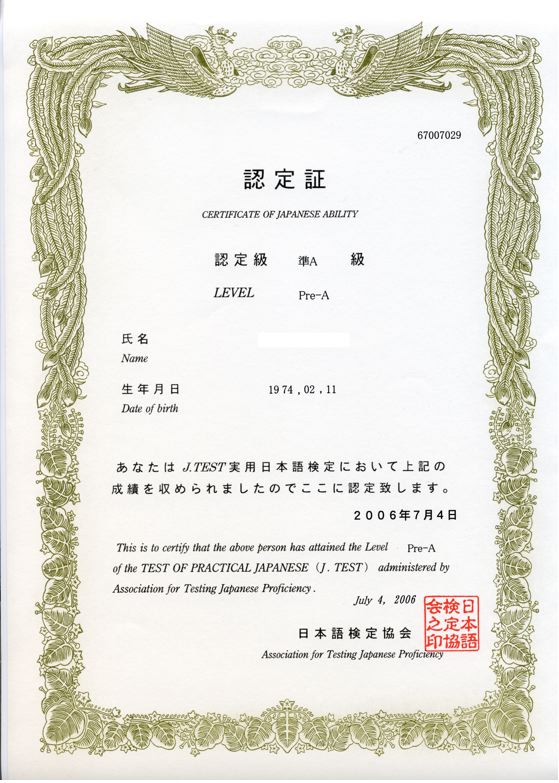
Last summer, I wrote about taking the J-test. But since that test is not THE MOST well-known Japanese proficiency test, last December I decided to take the Japanese Language Proficiency Test (JLPT) from the Japan Educational Exchanges and Services, which EVERYONE knows.

The results are in. With an 89% overall, I officially passed Top Level Japanese, or "Ikkyu" (~70% is the passing grade). According to the description (click on photo (don't mind the mug shot)), candidates passing the "Ikkyu" typically have received more than 900 hours of formal Japanese instruction. I guess in my case, I was able to get the "Ikkyu" with no formal learning due to wonderful multilingual environments provided by my parents. So, as I wrote in a previous post ("Learning Languages, Tetsu's Way"), I think that, although formal learning IS important and will give you a great start, combining it with the countless other ways to learn languages will probably yield the best results.

去年の夏にJ-Testという日本語検定試験を受けました。でも、一番有名なのはやっぱり日本国際教育支援協会の「日本語能力試験」なので、去年の12月に一級試験を受けました。

結果が届きました。毎年の合格点は70%前後だと知っていたので、多分大丈夫だと思っていましたが、ちょっとだけドキドキ。結果は89%!楽勝。ちょっと、読解と文法のとこでやられたかな(写真をクリックして拡大(昔のヤバい顔写真気にしないで下さい。。。))。

ちなみに、未だに悔しいのは活躍の「躍」は「足」偏なのか「光」偏なのかで迷ったこと。中国語に「耀」というのはあるので、そこで混乱したのかもしれない。見た瞬間、正しい答えは出たのに、後から「活躍する人は輝く」とか言う訳の分からない発想の展開で、「輝」と同じ「光」偏にした。試験直後に携帯で打ち出して、バカな選択に気づいた。この一問で90点台に入れたのに!!クッソー!!。。。な〜んて、贅沢なこと言っている場合じゃないよね。
v(^o^)7"


そうそう、通知書によると、一級というのは日本語を約900時間学習したレベルだそうで。ワオ。そんなに僕ちん勉強できない。。。模擬試験や他にこの試験の為にやった勉強を全部合わせたって、900「分」にもならないだろう。やっぱり、いい多言語環境に恵まれたのは大きいね。またもや、親に感謝。m(_ _)m

あとここで改めて感じたのは、正式な勉強も重要だけど、前に「テツ流言語習得法」にも書いた通り、僕が思うには、言語習得を成功させるためには勉強以外にも様々な方法を用いるのが効果的だと思います。

2007/01/25

Humor from around the world、世界中のユーモア

I recently found an interesting blog of a Japanese guy doing his MBA in Boston. He often talks about his experiences and cultural observations in the US and I find it quite amusing. Today he talked about how the perception of humor is different depending on the culture. As an illustration, he used a joke that could easily be translated into Japanese, but he found it to be funny only in English but not in Japanese. I found the joke to be very funny but I completely understand his point of view. In response to his joke, I also left one of my own as a comment. Again, I think it's only funny in English but not in Japanese.

I love all types of humor. Besides Japanese (example "Sanma" and "Shimada Shinsuke") and American humor (example "the Simpsons"), dark British humor (often relating to "social status"), cruel French humor (often relating to "dumbness"), and more direct and light Latin humor (often relating to "sex"), are all very funny. For typical British humor I recommend "Monty Python" and "Fawlty Towers", for French I recommend "Le Diner de Cons" (this is absolutely hilarious), and for Latin...well, just watch Univision (in the US) and you'll know what I'm talking about. I find myself very fortunate to be able to enjoy humor from many cultures.

Tell me about what you like! Movies, programs, comedians, etc.!

最近ボストンでMBAをやっている方の面白いブログを発見しました。彼は日本人の観点からアメリカでの色んな経験や文化の違いなどに関して話す事が多い。今日の記事は「アメリカンジョーク」の話で、お笑いのツボも文化によって全然異なると述べていました。うん、共感。その例として、「しゃべる犬」のジョークを教えてくれました。僕は爆笑。でも、確かに、分かってもらえないと思うから、簡単に訳せても日本人の友達には言わないと思う。そのジョークに対するリスポンスとして、僕も一つ似た落ちのジョークをコメントのとこに残してきました。やっぱり、日本人にとっては面白くないと思うヤツ。


しかしお笑いは良いですよね。日本の「さんま」や「紳助」も、アメリカの「シンプソンズ」も本当に面白いけど、よくソシャルクラスをネタにするクロいブリティッシュ・ユーモア、バカをネタにする残酷なフレンチ・ユーモア、そしてちょっと日本っぽいし、セックスをよくネタにする軽いラテン・ユーモアもみんな楽しいね!ブリティッシュ・ユーモアで代表的なのは「Monty Python」と「Fawlty Towers」、フレンチの方でめちゃめちゃ面白いのは「Le Diner de Cons」、そしてラテン系だと。。。そうだね、アメリカのUnivisionと言うチャンネルをみれば分かると思います。いや〜、色んな国の色んなジャンルのユーモアを楽しめるって、幸せな僕ちん。

みんなはどんなのが好きですか?僕は最近「欧米か!」で知られている「タカアンドトシ」にハマっていますね。「やっくん」も「陣内智則」も面白い。うん。

2007/01/01

2006

The title of this blog is “2006: A New Start for Tetsu”. Without going into details and enumerating things, I would just like to say that it was a wonderful year during which countless good things happened, many of which will have changed my life forever, and I’ll have my parents, co-workers, and friends to thank.

So, obviously, this blog was started in 2006. End of February to be precise. At first I wrote about two entries per week. Then with the start of my MBA, the pace dropped to once per week (and sometimes less). In total, there are about 75 entries, and below is my selection of the most popular or most memorable posts.


このブログのタイトルは ”2006: A New Start for Tetsu” 、「2006:哲の新たなスタート」です。あまり深入りはしませんが、ただ一つ言いたいのは、本当に色んな良い事があった一年でした。これも、親、職場の上司・仲間、そして友人たちのお陰です。心の底から感謝します。

勿論、このブログは2006年に始めたものです。二月の終わり頃だったかな。当初は週に二回位更新していたけど、やっぱりMBAをはじめて間もなくしたら、週一にペースダウン。最終的には約75個の記事を書きました。その中から、幾つか人気のあった、または個人的に好きな記事をまとめてみました。


Languages (by far the most popular posts) 言葉に関する記事(やっぱり一番人気がありましたね)
Pentalingual Conversation with a Linguist, 言語学者と5カ国語で討論

Learning Languages, Tetsu's Way; テツ流言語習得法

Multilingual Letter to Florent Dabadie

Tetsu on Japanese TV


People (more comin’ up) 重要人物(今後も乞うご期待)
Mom's B-day + Philosophy、母ちゃんの誕生日+哲学

Gregoire, グレグワール


Some glorious moments ちょっとした自慢
Interview with a Nobel Prize Laureate、ノーベル賞受賞者との取材

L’Actualité

Prize for [Biotecture]で受賞!

RaiAイベント優勝! RaiA Wins Prize!

My Japanese ain't bad,俺の日本語行けるじゃん


Fun 面白半分
Countries you've visited, あなたが訪れた国

パーソナリティーテスト, Personality Test

お遊び

Miscellaneous その他
初めてのブログ!

My Very First BLOG!

Novartis Biocamp

McGill MBA start


I wish everyone a wonderful and fruitful year in 2007.
それでは、皆さんにとって2007年がとても良い年になりますように。


2006/11/30

Pentalingual Conversation with a Linguist, 言語学者と5カ国語で討論

Through my recent article on my language learning techniques, I met an AMAZING linguist called Steve Kaufmann (he speaks 9 languages!). Yesterday, I had a wonderful discussion with him in 5 languages and it was truly a humbling experience. Thank you, Steve!

He wrote a little entry on his blog and uploaded the different parts of the interview, which was separated by languages as follows (in order): English, Japanese, French, Chinese, Spanish. Please click on them and have a listen! What do you think?

最近書いた「テツ流言語習得法」という記事のお陰で、バンクーバー在住の素晴らしい言語学者Steve Kaufmannさんと出会う事が出来ました。Steveさんはなんと、9カ国語も喋るんですよ!いや〜、上には上がいますね。恐れ入りました。m(_ _)m

昨日はそのSteveさんと、5カ国語で討論をしました。本当に楽しかったし、大変勉強になりました。Steveさん、ありがとうございます!

Steveさんはブログに記事を書いてくれましたし、その取材も言葉で分けて、次の順にアップしてくれました。英語日本語フランス語中国語スペイン語。クリックして、聞いてみて下さい。ご意見を頂ければと思います。

2006/11/21

Learning Languages, Tetsu's Way; テツ流言語習得法

"Those who know nothing of foreign languages, know nothing of their own."
「外国語を知らない人は、母国語も知らない」
....Johann Wolfgang Von Goethe (ゲーテ)

I love learning and using foreign languages. Near the end of the summer, I volunteered as a multilingual interpreter at the World Karate Championships. There I used my Japanese, English, Spanish, Chinese, French, and even a little bit of Portuguese. In the past, I’ve also worked as an interpreter on many occasions for companies such as Berlitz, Nittsu, or other independent firms, and I’ve done events and other volunteer work using these languages as well. And I’ve even done some whacky stuff like writing a blog post using 8 languages (see “Multilingual Letter to Florent Dabadie”) or going on Japanese national TV to say “How are you” in 8 languages.

So you can imagine, pretty much throughout my life, I get asked over and over again: "How did you learn to speak so many languages?" Well today, I thought I'd let you in on some of my tricks for learning and "keeping" new languages. Hopefully some of this will be helpful to those who are frustrated with their traditional language acquisition techniques (usually countless hours of inefficient studying and memorizing) and inspire them to take on different approaches.

(Read the rest of the article + Comments)
(Added Nov. 30: Interview in 5 languages)


僕は昔からとても言葉に興味があった。今年の夏もボランティアで空手の世界選手権で多言語通訳をつとめた。その時に使ったのは日本語、英語、スペイン語、中国語、フランス語、そしてポルトガル語もちょっとだけ。以前にもベルリッツや日通などの会社で通訳のアルバイトをしたり、イベントや個人の依頼などの仕事・ボランティアなどをやったりしてきた。さらに、若干常識はずれな例を挙げれば、八カ国語のブログ記事(Multilingual Letter to Florent Dabadie)を書いたり、テレビの全国放送で「こんにちは」を八カ国語で言ったりした事もある。

この様な僕の生き方を見て、「テツはどうやってこんなに言葉が話せるようになったの」と訊く方は大勢いる。でも、ちょっとした会話では納得いく説明が出来ないので、今日は「テツ流」の幾つかの言葉習得法をまとめてみた。これを読んでもらって、辛い勉強と面白くない暗記を手放し、普段考えない様な手法を見いだすインスピレーションにでもなれれば幸いです。

つづきとコメントを読む
(11月30日追加:5カ国語で取材

2006/07/13

|NNews| My Japanese ain't bad,俺の日本語行けるじゃん


I wanted an official evaluation of my Japanese, so I did a J-test about a month ago. I guess it's like your TOEFL and TOEIC, except it's for Japanese. Got the results. Pretty happy about it, considering the fact the I CAN'T WRITE KANJI (I can type though)! I did well in the first parts (hearing and reading) but of course didn't do too well in the writing. But I still ranked 31st in 3521 candidates. Not bad for someone who's never studied the language huh? But can't be satisfied. Must learn to write kanji! Practise, practise, practise!

自分の日本語のレベルを客観的に評価してもらいたかったので、先月J-testを受けました。試験としてはTOEFLやTOEICに似たものじゃないかと勝手に想像しています。聴解力・読解・記述と全部テストされます。でも、漢字はパソコンで打ち出せるが、手ではが書けない僕なので、あまり高得点は期待出来なかった。実際試験では平仮名使いまくり。でも、意外にまあまあな結果だったので、自分なりにちょっと満足です。僕と同時に3521人がこの試験を受けたところ、僕の順位は31でしたので、トップ1%には入りました。でもこれで満足してはならない!漢字の勉強するしかない!

2006/04/01

Multilingual Letter to Florent Dabadie |PPeople|LLanguages| |MMemorable|

(Real date of post: 060315)

ダバディさんの紹介はこちら


Cher M Dabadie,


Je me présente: Tetsu. Je suis votre plus grand fan venant du Québec. La première fois que je vous ai vu à la télé c'était dans les résidences de l’Université Laval, où je terminais mon doctorat. C’était il y a presque 4 ans déjà, durant la Coupe du Monde, où vous jouiez le rôle d’interprète pour Philippe Troussier. Ce n’est qu’après mon arrivée au Japon en 2003, et après vous avoir revu à la télé, que je me suis rendu compte que vous étiez beaucoup plus qu’un interprète Français-Japonais. Beaucoup plus qu’un interprète, et beaucoup plus de langues que Français et Japonais.

I truly admire and envy what you have done with your multilingual talents. While I have also been blessed with a multilingual background (thanks to my parents and to my surroundings), I don't fully use my languages in my profession as a biomedical researcher. Therefore, I continuously try to find new ways to use them outside my job (e.g., occasional contracts as an interpreter, participation in language clubs and, WRITING CRAZY LETTERS LIKE THIS ONE!). Interestingly however, after reading several of your inspirational BLOGS, I realized that we had much more in common than just languages (click to see my background): From the way we perceive the world around us, our philosophies, humour, down to similar childhood experiences, favorite TV shows (see blog "Too Funny" for hilarious Simpsons link), and even, incidentally, the year we were born.

Trato esta carta como si la estuviera escribiendo a mí mismo, y sé que si algún día recibiera un mensaje como este, lo leyera con mucho placer. Y, visto que está leyendo hasta aquí, presumo que haya picado su interés. Estoy seguro que, como yo, Ud tiene una curiosidad infinita y un deseo inmenso para saber todo. La búsqueda de conocimientos nos ha empujado a viajar a través del mundo, para ver, comer y experimentar cosas con que la mayoria de la gente ni pueden soñar. Todas las experiencias que vivimos durante esas épocas, nos dieron la fuerza, la sabiduría, y mucho crecimiento personal...aúnque paradójicamente, con todas las amistadades que hacemos, a veces adquirímos también un poco de solitúd por culpa de conocer demasiado. Me imagino que sabe de qué estoy hablando, y será Ud uno de los rarissimos.

正直言って、私はダバディさんのブログを読んだとき、やはりこの人 は世界を見ているからこそ、どのような話題に関して述べても、常に客観性と謙虚さが感じ取られるのだと思いました。それは日本の警察の態度に関しても、優 しいタクシーの運転士さんの哲学に関しても、ダバディさんが書く文章には「chapeau!」 としか言えません。世界で成長させたスケールの持ち主だから、本当の意味で「人間はみんな同じ」と思えるのでしょう。だから、あのタクシーの運転士さんと も波長が合ったんだと思います。有名人でもなく、外国人でもなく、普通の人間として接してくれたからでしょう。さらに、普通の日本人と同じように接しても らう為、ダバディさんは日本の文化を深く分析したはず。だから、日本語のレベルが高いだけでなく、言葉遣い・表現・仕草などが非常に日本人っぽくなってい ます。よって、見事に日本の社会にとけ込めたダバディさんはおそらく普通の外国人よりも、真の日本の社会の厳しさとその暖かさを経験し、欧米と異なった価 値観も学べたのではないかと思います。勿論、どの国も良いとこ、悪いとこがありますが、それを多く経験して、良いものだけを自分の人生に応用出来るダバ ディさんは、賢い生き方をしていると思います。そして、その知恵を広げようとする行為はさらに素晴らしいものではないのでしょうか。

Alors voilà, j’espère que vous ne sentez pas avoir perdu du temps pour lire ce BLOG. I had a lot of fun in writing it, feeling kind’a like I was talking to a brother. Demais, sempre he querido escrever uma carta asim, com muitas lenguas… pero a quem? Florent Dabadie, possívelmente a única pessoa no mundo que pôde entenderla. Isso! (Sé que fala Português porque vi a sua entrevista com Vanderlei Silva (que foi muito interesante)). Molto grazie per avere letto questa lettera. Bravissimo per il suo buon lavoro è espero che possa continuare ancora molti anni di più. これからも応援しています。韓国語も頑張って下さい。(私も習いたいです。韓国料理も美味しいし、韓国の女性も素敵だし。) 希望有一天我們能成為好朋友!再見!(I don’t know if you know Mandarin so I’ll keep it at this. Und Ich glaube daß du kein Deutsche sprechen kannst, oder? Vieleicht ein bißchen?)


Yours truly,

Tetsu

P.S. Anyone who can understand this letter in its entirety, please feel free to contact me. I would love to be your friend! It would be an honor. (Well, I'll be your friend even if you can't read it all!)

(e-mail) musico11jp@yahoo.co.jp
(my website) www.geocities.jp/musico11jp/index.html

Tetsu on Japanese TV |FFun|NNews|LLanguages|

(Real date of post: 060315)

やっとムービーの載せ方分かったよ。Htmlは習わないと難しい!取りあえず、一つ載せてみるね。

これは2005年の春、僕のバンド 「RaiA」が吉本興業の番組のオーディションを受けた時の出来事。残念ながら、あのオーデェションは通らなかったけど、 ちょうどそのとき「ハナタカ天狗」と言う新しい番組の出演者を募集していたので、応募した。そして、RaiAのみんなには申し訳なく、俺だけ採用され ちゃった!ごめん!ちなみに、クリップの中では「大学院生」って言ったけど、ウソです。研究員って言うと説明が面倒なので。

My band "RaiA" went to audition for a program on national TV last spring. Although RaiA didn't make the cut that time, I was asked to go on for another program called Hanataka Tengu.

http://www.youtube.com/watch?v=eDIydXEOhvA&eurl=


後ほどにRaiAのクリップなど、スノボのムービーとかも載せるから、また観てね。
Later I'll put up RaiA's clips and other fun stuff, like my next snowboarding trip, etc. Stay tuned.


他のメディア出演。Link to other media appearances.
http://www.geocities.jp/musico11jp/Media.html (日本語)
http://www.geocities.jp/musico11jp/MediaEng.html (English)

Florent Dabadieを紹介します |PPeople|

(Real date of post: 060302)

皆さんFlorent Dabadieって知っている?彼は2002年ワールドカップでPhilippe Troussier監督の通訳を勤めていたフランス人です。皆さんは言葉に関して「テツはまぁまぁ出来る」と言うイメージを持っていると思うけど、 Dabadieさんは本当に言葉の天才ですよ。なんせ、俺が知っている限り「フラ語、英語、日本語、韓国語、スペイン語、イタリア語、とポルトガル語」を常 に使っ て仕事をしている。後は知らんけど、中国語も出来てもおかしくないと思う。で、日本語に関しては発音が非常に良いだけでなく、本まで出版していると言う超 上級者。そして何よりも「神様は不公平だな」と思うのは、彼は背も高くて、格好もいい!だってモデルもやってんやでぇ!もう、日本では人気がドンドン上昇し て、今はテレビにもガンガン出るし(「スポルト」等)、雑誌や新聞など色々とマスコミの中では引っ張りタコですよ。ハハ、テッちゃんちょっと嫉妬?な〜ん て ウソだけど、本当に尊敬してるよ。俺と歳も一緒だし。でも、一番この人のスケールの大きさを感じたのは彼のブログ(http://dabadie.cocolog-nifty.com/blog/main.html) を読んだとき。あんな大物なのに、彼の書く事は凄くシンプルで、凄く謙虚さが伝わってくる。日常の体験談を通じて、人種差別、男女差別、社会的地位、職権 等に対する彼の哲学を教えてくれる。それはまさに世界を舞台にしてきた男の哲学。カッチョいい!他にも政治、文化、スポーツ、映画等々、内容豊富なブログ で面白いよ!

そこで考えました。うん。。。なんか、お友達になりたいな〜って。。。どうしたら良いかな?手紙書こう!でも、普通の手紙だ とつまらないので、8カ国語で行こう!で、彼のメールアドなんて持っていないので、このブログに載せて、彼のブログからTrackbackして、読んでく れる事を祈るしかない。

。。。と言うことで書いてみました (Blog: "Multilingual Letter to Florent Dabadie")。皆さんもチャレンジ精神を出して、読んでみて下さいな。。。

2006/01/01

Learning Languages, Tetsu's Way (cont'd); テツ流言語習得法(つづき)

(...this is the continuation of an article found here) (日本語は下の方へ)

The Fundamentals

In theory, my views are probably not very different from those of many language specialists. I believe that no matter how much you study, you will not speak a new language unless you practice. In fact, too much theory and not much practice is a sure ticket to frustration land. At the same time, I am also not an advocate of No-Study-All-Practice. Well, at least for adults. For example, I do not think that you should simply go to a foreign country without any prior knowledge of the language spoken there and wish that “miraculously” you would pick it up because you will have many people to practice with. You will probably be too embarrassed to even speak one word. So, at the risk of sounding “obvious”, I believe that finding the right balance between theory and practice is what is necessary and sufficient to take you to satisfaction land. Where my approach may differ from conventional techniques is in the implementation. Let me explain by giving you examples and tips, some of which relate to my experience studying Spanish, the fifth language that I speak fluently today.

Tip #1: Studying the Basics
In 1992, I was living in Ottawa, Canada, while my big buddy Greg was doing a 1-year exchange program in Ecuador. So I decided I’d go visit him for two weeks during Christmas vacations. But I figured, if I’m going there, I might as well learn Spanish. But I didn’t take Spanish courses at the university, or sign up for any private lessons, and no I didn’t have any Hispanic friends. My only tools were a pocket dictionary and a set of cassettes to learn some travelers’ Spanish. Pretty much every night I’d read the little grammar book that came with the audio package before going to sleep, and I’d listen to those cassettes all the time (in the car, in my walkman, and even in my sleep (I kept it playing on a loop)). So before the trip, for about 1 month, that’s how I “studied” Spanish. And that was IT in terms of “studies”, and it took care of the very first steps of language acquisition: basic grammar and BREAKING IN YOUR EARS!

After that, I went to Ecuador and had a blast. No, I couldn’t speak much, but I took out every word that I knew and tried to talk to as many people as I could.

Tip #2: Find People to Practice with
During and after acquiring a very basic level of grammar and vocabulary, you should practice, practice, and practice. Yes, I know, this is easier said than done. Since languages schools and trips to foreign countries cost a lot of money, many people can’t afford these things. Then the big question becomes of course, where do you find people to practice with? In my case, I go for language clubs and associations. For example when I got back from my two-week trip to Ecuador, I immediately joined the Ottawa University Spanish Club (called S.A.L.S.A.). In these kinds of clubs there are always local people like yourself who want to learn the foreign language, and there are always the foreign native speakers who want to learn your language. It’s basically a language and culture matching party! I personally think that this is fertile territory where not only language is exchanged, but often times great friendships, too. I still have strong ties with some of my friends that I made at S.A.L.S.A. Today, in Tokyo, I go to various language Meet-Ups and continue to make friends from around the globe.

Tip #3: Keep Studying and Learning Contextually
Next, I would like to talk to you about continuing your language acquisition process using contextual learning. That is, instead of trying to study all the intricacies of any given language, you learn what is most useful to YOUR living context: The things that you see or hear everyday, the things that you like, things that affect your life or work, etc. Anything. Here are three simple exercises.

The first one is easy. I simply translate or transcribe a lot of the stuff that I like: videos, newspapers, magazines, etc. For example, for foreign videos, I would painstakingly watch a few seconds, transcribe or translate what I was able to understand, and repeat. Due to countless play/rewind cycles, at first it takes hours to get through just a few minutes of the video. But this is a HIGHLY effective method for language acquisition. You MUST be patient and appreciate the micro-progress that you make at the beginning, because they will eventually lead to giant steps later. As for printed material, I would simply take an article on something that interests me and just translate it. If you’re working on the Japanese/English language pair, why don’t you try it out with this blog? You can even check your answers!

Making things more challenging and fun, the next exercise consists of taking notes during classes (or seminars, meetings, etc.) using your foreign language. Again, this is very tough at the beginning because the lecture itself is already a burden. But your mind gets used to the pace and your vocabulary builds up at an exponential rate. Furthermore, besides the obvious advantage of improving your new language, this exercise also has two added values: 1) It forces you to listen and understand your class material, and 2) It deters your classmates from borrowing your notes. When they ask you for your biology notes and it says: “…cuando la célula muere por apoptosis…”, they usually hand it right back to you.

Finally, here is the ultimate contextual exercise, which I find is very effective, fun, and somewhat crazy: “Conversing with yourself, out loud or in your head.” I’m not talking about striking up a philosophical debate with your inner you. I mean saying to yourself in a foreign language such simple things as: “I wonder if I should buy this onion or those dill pickles…” Carry your pocket dictionary with you everywhere you go and when you don’t know how to say something (e.g., dill pickles), look it up on the spot. Just at the supermarket you’ll realize how learning up everyday things is challenging, interesting, and most importantly, USEFUL. Think about it: These are things that form part of your life and you use this vocabulary all the time! Why not learn this instead of trying to understand subjunctive conditional present perfect of the future preterit progressive tense in 3rd person plural? Hey, they don’t teach you how to say “dill pickle” in language schools!

Tip #4: Be born to visionary parents
OK, you got me. This last tip is not something that you can apply to yourself. But I wanted to add this one so that you can take some comfort in knowing that I didn’t learn all my languages on my own. I was born to very open-minded and visionary parents who encouraged me to use many languages all the time. But I also want to urge you, if you have children, to become parents with open minds and to think seriously about developing their linguistic capacities for their future.

I say this because I have seen countless second-generation immigrant kids in Canada and in the US who can only speak English because their parents thought that it would be too hard for their children to learn more than one language at a time. So the “parents” actually make an effort to speak English to their children, thinking that they are doing their children a favor, when in reality, they are robbing their children of a bright future. I also see an analogous pattern in Japan, where many parents think that learning a second language, very often English, will confuse their children. Believe me, nothing can be further from the truth.

In my case, I have always lived in multilingual environments ever since I was a kid. Living in Taiwan as a child, I spoke Mandarin with my father, Japanese with my mother (and relatives on her side), Haka (a Taiwanese dialect) with relatives on my father’s side, Taiwanese with my neighbors, and English at school. Then I moved to Quebec, Canada to attend a French high school. So there you go, my parents masterminded a scheme in which I would change environments constantly so that I could absorb all my languages without having to go through the painful process of formal “studying”. I guess that’s why I believe that formal studying, although important, should NOT be the focal point of your language acquisition process. It should only serve as a STARTING point, after which there are countless other “practical” methods that you should pursue. There are many ways to do one thing, and more often than not, a personalized combination of multiple methods yields the best results.

I would definitely love to hear your thoughts and comments on this posting or about any of your experiences in learning a new language! Please click on “Post a Comment” below.


(これはここにある記事のつづきです)

基本

理論上、僕の考え方は言語の専門家たちとはあまり変わらないと思う。練習をしなければ、いくら勉強しても無駄です。勉強のしすぎと練習不足は確実にフラストレションに繋がるだろう。でも、だからと言って、僕は「勉強無用、実戦のみ」とも思わない。最低限大人の場合はね。例えば、現地の言葉を一言も分からずに外国へ行くのは勧めない。話し相手がいっぱいいるからといって、奇跡的に言葉が身に付く訳ではないのだ。むしろ、自分の無力さを意識しざるを得ない罠にはまり、恥ずかしい思いをして一言も話さずに帰ってくるでしょう。だから、やっぱりバランスよく、基本的な文法と単語を覚える事と、適度な練習をする事がいい結果に繋がるやり方だと思う。フーン、、、じゃあ、「テツ流」とはどういった特殊な手法なのかって 。それでは、 いくつかのアドバイスと僕がスペイン語を習った時の例などを挙げながら説明しよう。

アドバイスその一。基礎勉強をする
1992年、僕はカナダの首都、オタワに住んでいた。当時、大親友のグレッグは交換留学で南米のエクアドルに行っていたので、遊びに行く事になった。でも、どうせ行くのなら、スペイン語もついでに習う事を決心した。でも、大学でスペイン語の授業も取らなかったし、個人レッスンも受けなかった。勿論、教えてくれる友人もいなかった。唯一使ったのは、そこら辺の本屋で簡単に手に入るスペイン語習得カセットとポケット辞書。これで、寝る前にはセットに付いてきた文法の本を読んで、寝るときにはテープをカケッパにしていた。車の中でもよく聞いたなあ。今となれば、乗せた友達はみんな相当ビックリしていたんだろうなあ。まあ、こんな感じで旅立つ前の一ヶ月間位はこの様な自己流のスペイン語勉強をした。でも、ガチガチな「基礎勉強」はこれだけで十分だと思った。これで、言葉の習得に欠かせない基本的な文法も分かったし、多少の「耳慣らし」も出来た。

これで、僕はエクアドルに行って、限られた言語力とその時の勢いで最高な旅を楽しむ事が出来た。

アドバイスその二。練習する相手を捜す
基礎勉強中でも、その後でも非常に重要なのはやはり練習です。勿論、簡単に言うけど、相手がいないと難しい。でも、レッスンも海外旅行も金銭的な負担が高い。となると、一緒に練習してくれる人をどこで捜すかで悩む人は多いと思う。僕のお気に入りは言葉のサークルやアソシエーションです。例えば、エクアドルから帰ってきたとき、直ぐにオタワ大学のスペイン語サークル(S.A.L.S.A.)に加入した。こういった集まりには自分みたいに外国語を習いたい人と、その言葉を話すネイティブスピーカーである留学生たちがいる。早い話、言葉の合コンみたいなもんですよ。個人的には、こういうとこでは言葉以上なものを得ることが出来るとも思っている。僕なんか、未だにS.A.L.S.A.時代の友達と頻繁に連絡を取っている。そして、東京にいる今でも、色んな言葉のMeet-Upに積極的に参加し、常に世界的規模で人脈を広げている。

アドバイスその三。状況に合わせて勉強・習得を続ける
次の話題は状況に対応した習得法を用いて一生懸命習った言葉をさらに一段とレベルアップする事です。この方法では、一つの言語の全てを勉強するのが目的ではなく、自分の生活環境・スタイルに一番適したものだけを習うのです。毎日見る・聞く・接するもの、好きな事、人生や仕事に影響を及ぼす事、等々。何でも良いんですよ。ここで、僕がよくやった三つの事を紹介する。

最初に紹介するのは至ってシンプル。自分の好きなものを翻訳するだけ。好きなビデオ、新聞、雑誌など、色々あるでしょう。例えば、ビデオなんかを見ながら、セリフをちょっとずつ翻訳して行く。最初は本当にチンプンカンプンな為、再生と巻き戻しの繰り返しで数分間分の翻訳でも数時間はかかる。本当に粘り強さが試されるこの手法は「非常に効果的」だと思う 。でも、ほんの少しの進歩でも意識する事が出来るようになれないと大変辛い。だけど、頑張れば、確実に大きな進歩に繋がる。そして、新聞や雑誌、さらにホームページやブログなどの文章を読みながらも、同じ事ができる。例えば、日本語と英語のペアなら、このブログの記事などで翻訳の練習をするのは如何ですか?答えが合わせられるので、面白いのでは。

次の練習法はさらにチャレンジ精神が求められるけど、面白いと思う。それは授業を受けている時に(またはセミナー、ミーティングなど)、習っている外国語でノートをとる事。これがまた大変なんですよ。僕の場合は生物学とか化学とか、授業の内容を理解するだけでも死にそうなのに、頭の中で一回翻訳をしてから、それを文にして残すのは一苦労。でも、これも最初はキツイけど、なれればスピードアップする。さらに、外国語が進歩する以外にも、この手法には2つ思わぬ利点があるんです。その一つは、翻訳できるようになるため、自然に集中して授業の内容を把握するようになる。そして、2つ目は、クラスメートたちからノートを要求されなくなる。

最後に紹介する練習法も効果的で、楽しくて、若干クレージーです。これは大声でも、心の中でも良いのですが、「外国語で自分と会話をする事です」。なにも、自分の中で自分と深い哲学的な討論をしなくても、簡単で日常的な会話をすれば良いのです。例えば、スーパーで、「このタマネギを買うべきか、あの漬け物を買うべきか迷うなあ、、、」と外国語で自分に言ったりとか。勿論、大声で訳の分からん独り言を外国語で言ったら、周りがドンビキする可能性があるので、公共の場では自分の中で言う事を勧める。でも、この様な会話に慣れると、意外と楽しいもんだよ。一人で鏡の前でやるとさらにリアルな会話が出来る。そして、外出の際にも常にポケット辞書を持ち歩いて、自分との会話中に疑問がでたら直ぐに調べる事によって、単語は凄まじいペースで増えて行く。例えば、スーパーに行くだけでも、非常に面白くて、ためになる良い勉強ができるよ。だって、日常生活の一部になるものばかり並んでいるではないか。僕的には、この様な勉強の方が、学校で習う「現在形やら、過去形やら、進行形やら、非進行形やら、動詞、不動詞、前置詞、後置詞、形容詞、早稲田詞、男性形、女性形、ホモ形」等々の数えきれない面倒くさいものよりも遥かに使えると思う。だいたい、学校では「漬け物」なんて教えてくれないでしょう!

アドバイスその四。先見の目を持つ両親に生まれること
そうね、この最後のは自分でどうこうなるものではないよね。うん。でも、これを加えた理由は、みんなに絶望的になってもらいたくないからです。八カ国語まで習えたのは僕一人だけの力ではなく、先見の目を持った親が開いてくれた道があったからできたって事を知ってもらいたかったのです。そこで、お願いです。もし子持ちの方がこの記事を読んでくれているのなら、是非いまからでも多言語の環境を作って、子供に広い未来を与えてあげて下さい。

多くの日本人の親は「日本語もろくに分からないうちに子供に英語を教えると両方中途半端になる」と考えている。でも、僕は決してこのような事はないと思っている。子供の言語力のパワーを自分の感覚で評価しないでもらいたいもんです。そして、似た様な考え方で、さらにひどい例と言えば、カナダやアメリカの移民の中には英語しかしゃべれない二世の子供が大勢いる。彼らの親も「子供には一つの言葉」という考えを基にしているけど、「外国に住んでいるから、選ぶのなら英語」といった、究極な選択をする。そして、「自分の子供の為」と思いながら、無理をしてまで、下手な英語で子供と話す。これこそ中途半端な親子のコミュニケーションではないのでしょうか。そして、「究極な選択」というのも、「子供のため」というのも錯覚であって、実際は子供の未来の可能性をつぶして行っているだけではないか。もっと素直に、いえの中では自分の国の言葉と文化を教えてあげれば良いのに。

やっぱり、どこに住んでも、我が子には小さいときから多言語になれさせれば、大人になってから貴重な財産になると思う。僕の場合、親が見事な多言語環境を作ってくれた。台湾に住んでいた時から、父親と北京語、母親と日本語、父親側のジッちゃん・バーちゃんと客家語、ご近所さんたちと台湾語、そして学校で英語を使っていた。その後、カナダのケベック州に行って、フランス語の中学に入った。まあ、こんな感じで、文法などの「苦痛な勉強」も殆どしないで、知らず知らずに言葉を覚えることができた。この様な過去があるから、僕はガチガチな勉強をあまり信じないのでしょう。そして、大人になっても、上で説明したとおり、僕にとって言葉の習得の過程のなかでの「苦痛な勉強」の割合はごく小さいし、ほんに初歩に過ぎない。その後の上達は、いかに自分のオリジナリティーを発揮して、面白くて、かつ実用性のある手法で「楽しい勉強」が出来るかによって決まると思う。どのような習い事にも無数のやり方があって、幾つかを試して、自分に合ったセットを上手く組む事が出来れば、いい結果に繋がるに違いない。

いかがでしたでしょうか?良かったら、是非ご意見・ご感想などを聞かせて下さい。また、外国語を習った経験談も大歓迎です!下の「Post a Comment」のとこをクリックして書き込みを残して下さい。